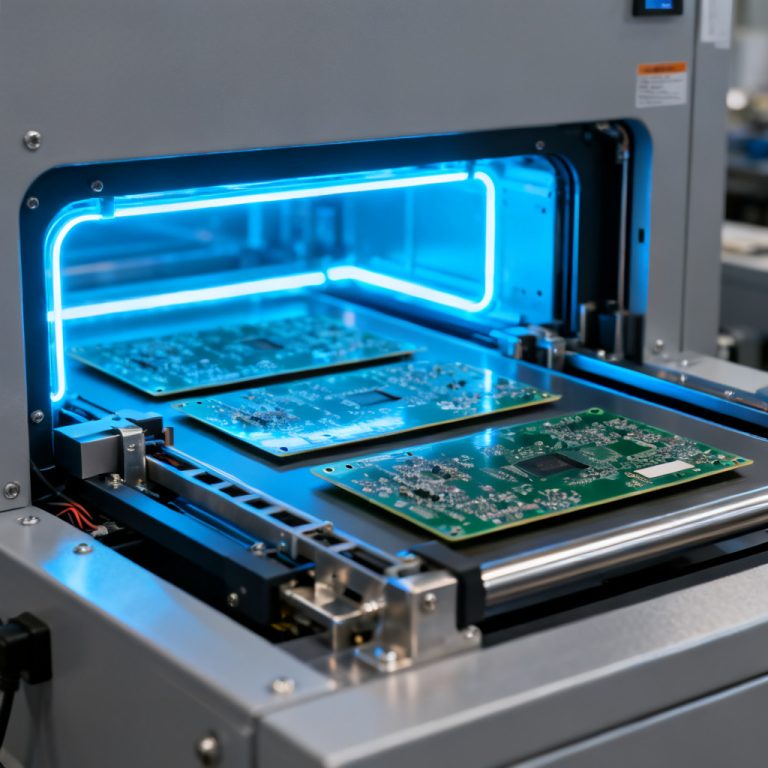
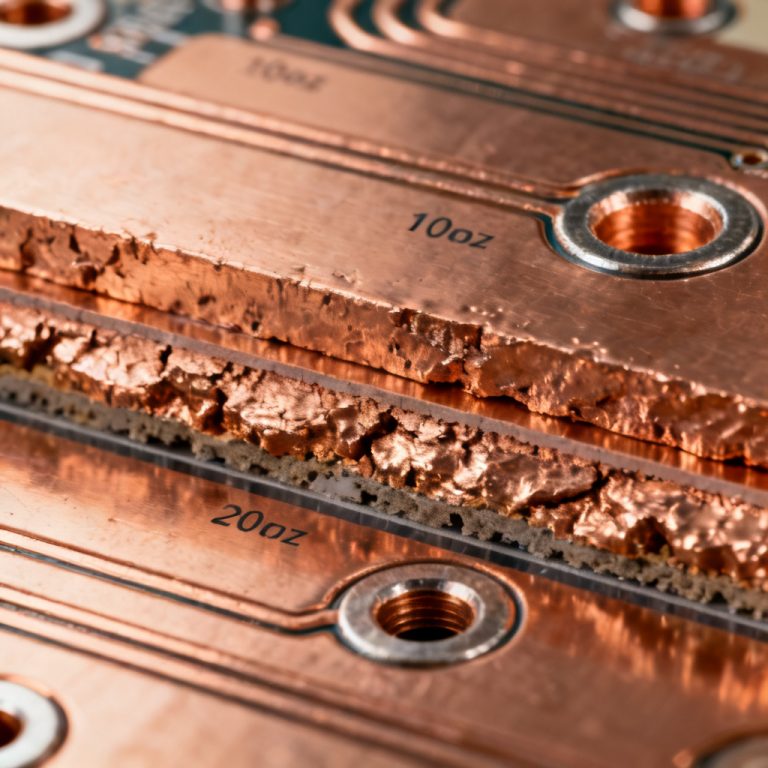
High-Tg FR4 PCB materials with Tg180+ are essential for automotive and industrial applications that demand thermal stability and reliability. These advanced laminates prevent delamination and ensure long-term performance under extreme conditions.

What is High-Tg FR4? Material Science Behind Tg180+
Understanding Glass Transition Temperature (Tg)
High-Tg FR4 materials exhibit a glass transition temperature of 170-180°C or higher. Below Tg, the material is rigid; above Tg, it softens. Standard FR4 has Tg of 130-140°C, while High-Tg FR4 for automotive and industrial uses Tg180+ to maintain dimensional stability.
How High-Tg FR4 is Achieved
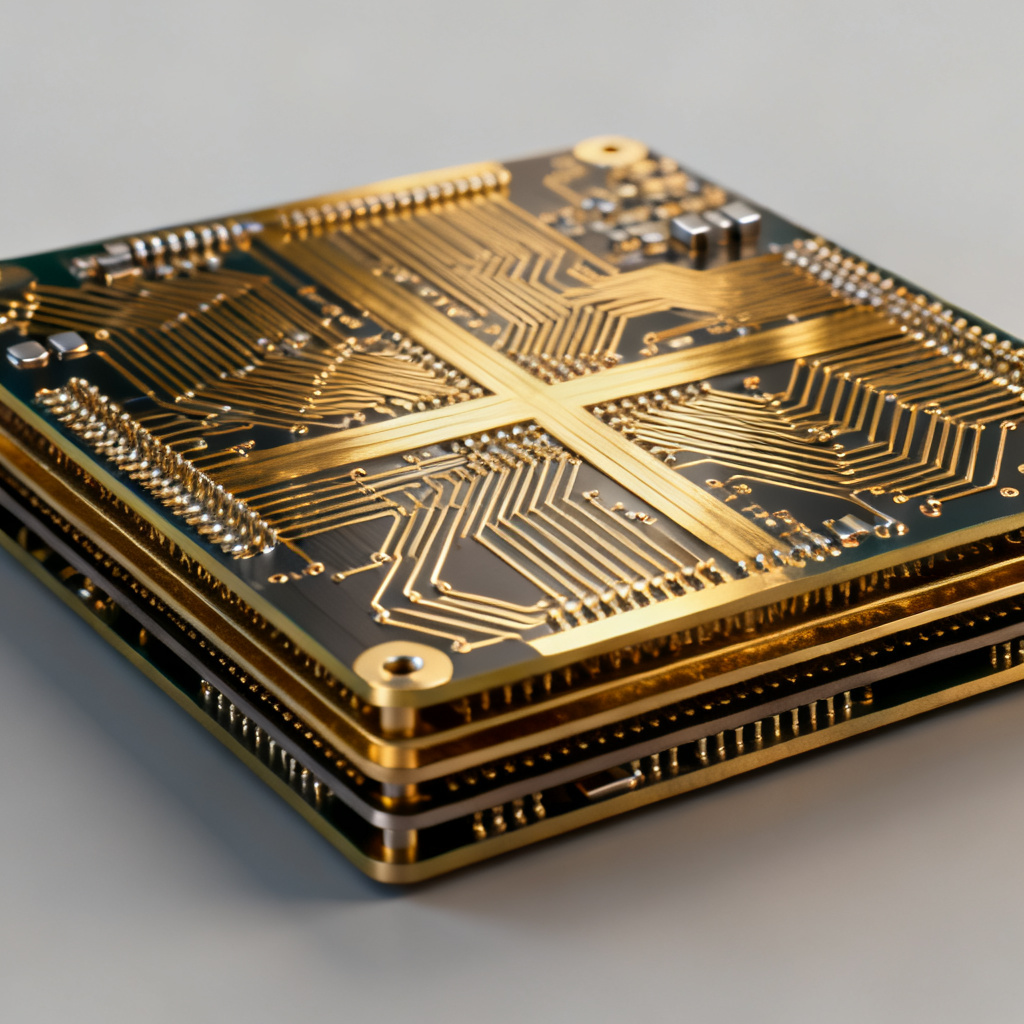
High-Tg FR4 is produced using modified epoxy resin systems with higher cross-link density. Inorganic fillers like silica reduce CTE, and specialized glass fabrics improve adhesion. This makes High-Tg FR4 ideal for demanding environments.
Key Properties of Tg180+ Materials
- High thermal stability: Maintains properties up to 180°C.
- Low Z-axis CTE: Prevents via failures.
- Improved chemical resistance: Withstands solvents and fluxes.
- Higher flexural strength: Resists warpage during reflow.
- Enhanced dielectric properties: Stable Dk and Df over temperature.
Why Automotive and Industrial Applications Demand High-Tg FR4
The Automotive Environment: Heat, Vibration, and Reliability
High-Tg FR4 is critical for automotive electronics like EV power modules and under-hood components. Temperatures reach 125-150°C continuously, with spikes during soldering. High-Tg FR4 prevents delamination and ensures solder joint reliability.

Industrial Control Systems: Continuous Operation Under Stress
Industrial High-Tg FR4 PCBs operate in factory automation and power converters. These environments demand long lifespan and resistance to humidity. High-Tg FR4 maintains dimensional stability and prevents CAF growth.
| Property | Standard FR4 (Tg 130-140°C) | High-Tg FR4 (Tg 170-180°C) |
|---|---|---|
| Maximum Operating Temperature | ~130°C | ~170°C |
| Z-axis CTE (below Tg) | ~50-60 ppm/°C | ~40-50 ppm/°C |
| Z-axis CTE (above Tg) | ~250-300 ppm/°C | ~180-220 ppm/°C |
| Flexural Strength | Moderate | High |
| Moisture Absorption | 0.1-0.2% | 0.05-0.1% |
| CAF Resistance | Standard | Enhanced |
| Typical Applications | Consumer, low-power | Automotive, industrial, high-power |
Manufacturing Considerations for High-Tg FR4 PCBs
Lamination and Pressing
High-Tg FR4 requires higher pressing temperatures (180-200°C) and longer cure cycles. Vacuum pressing is essential to eliminate voids.
Drilling and Hole Quality
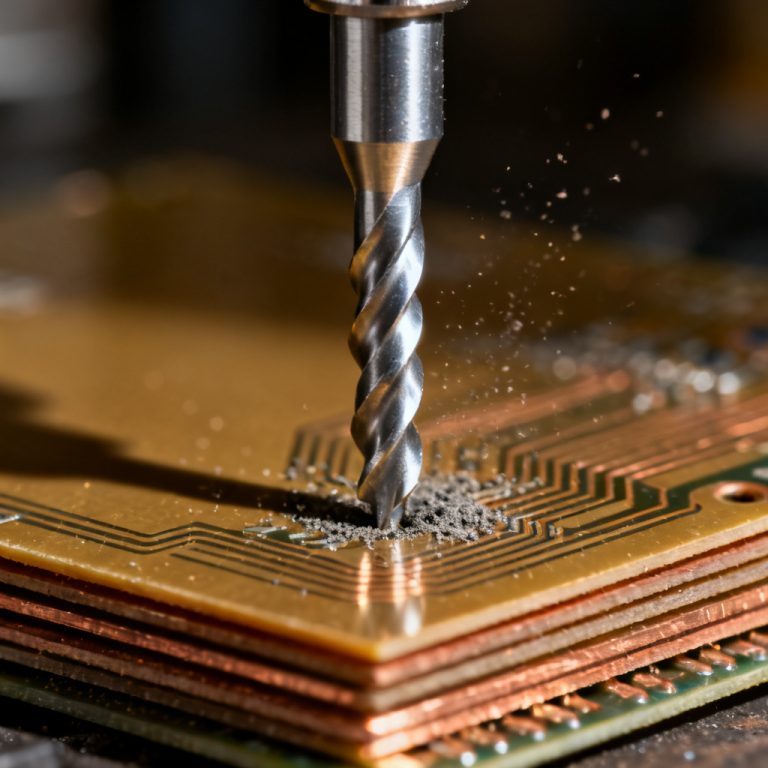
Harder drill bits and optimized feed rates are needed for High-Tg FR4 to prevent burring and resin smear.
Plating and Through-Hole Reliability
Aggressive desmear processes and careful electroless copper control ensure PTH integrity in High-Tg FR4 boards.
Solder Mask and Surface Finish
Plasma treatment improves solder mask adhesion. ENIG and HASL are compatible with High-Tg FR4.
Selecting the Right High-Tg FR4 Material
Common High-Tg FR4 Grades
| Grade | Tg (°C) | Key Features | Typical Applications |
|---|---|---|---|
| IT-180A | 180 | Good CAF resistance | Automotive ECU, industrial controls |
| S1000-2 | 180 | Low CTE | Power modules, battery management |
| TU-768 | 180 | High thermal endurance | LED lighting, high-brightness drivers |
| EM-285 | 180 | Excellent moisture resistance | Harsh environment sensors |
| R-1755C | 175-180 | Lead-free soldering compatible | Automotive under-hood |
How to Specify High-Tg FR4 in Your Design
When ordering High-Tg FR4 PCBs, specify Tg ≥ 170°C, CTE ≤ 2.5%, and thermal stress test per IPC-TM-650. Include CAF resistance and UL 94 V-0 rating.
Cost vs. Performance Trade-off
High-Tg FR4 costs 15-30% more than standard FR4, but reduces field failures and extends product lifespan. For automotive and industrial applications, the investment is justified.
Design Guidelines for High-Tg FR4 PCBs
Thermal Management
Use thermal vias and heavier copper (2 oz+) with High-Tg FR4 to manage heat. Keep components away from board edges.

Stack-up Considerations
Maintain symmetrical stack-up and use same-family core and prepreg for High-Tg FR4 to match CTE.
Via and Pad Design
Increase annular ring by 10-20% and use larger vias for high-current paths in High-Tg FR4 designs.
Testing and Quality Assurance for High-Tg FR4 PCBs
Thermal Stress Testing
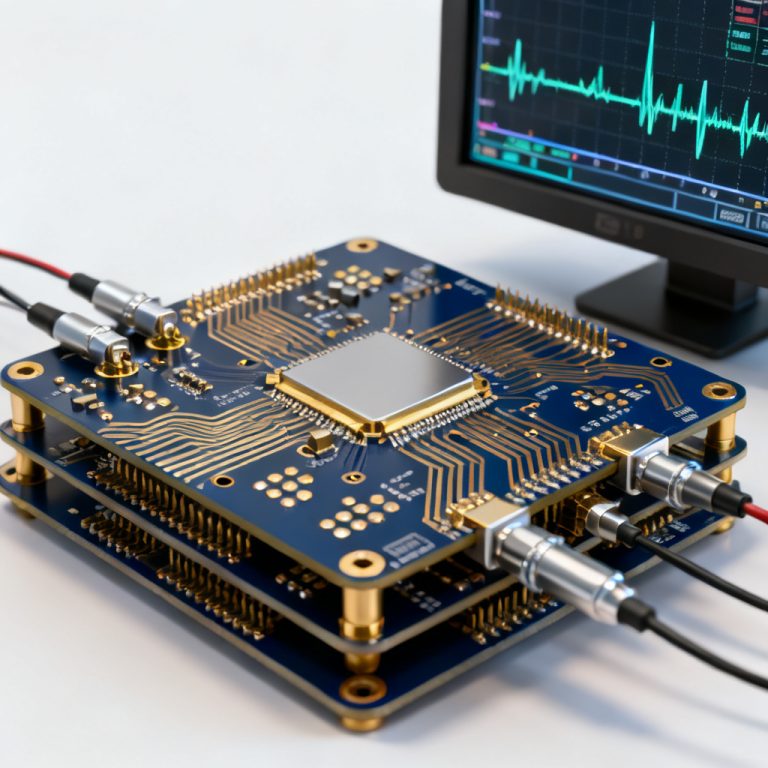
High-Tg FR4 boards undergo 288°C solder float test for 10 seconds, 6 cycles per IPC-TM-650. Thermal cycling from -40°C to +125°C for 500-1000 cycles is also required.
Electrical Testing
High-voltage testing at 500V DC and insulation resistance ≥ 100 MΩ after humidity exposure ensure High-Tg FR4 reliability.
Mechanical Testing
Copper peel strength ≥ 1.0 N/mm and flexural strength ≥ 400 MPa are standard for High-Tg FR4 materials.
Common Mistakes to Avoid with High-Tg FR4
- Assuming all High-Tg FR4 materials are equal.
- Ignoring moisture sensitivity.
- Overlooking lead-free soldering compatibility.
- Using standard FR4 in multi-layer High-Tg boards.
- Skipping thermal simulation.
Industry Standards and Certifications
- IPC-4101C: Base material specification for High-Tg FR4.
- IPC-6012 Class 3: High-reliability PCB qualification.
- AEC-Q100/200: Automotive electronics qualification.
- UL 796: PCB safety standard.
- IEC 60068: Environmental testing.
Conclusion: Why Your Automotive or Industrial Design Should Use High-Tg FR4
High-Tg FR4 (Tg180+ materials) is a necessity for PCBs in automotive and industrial environments. It prevents delamination, ensures 10+ years of field operation, and meets rigorous standards. Our company specializes in High-Tg FR4 PCBs with certified materials and IPC Class 3 manufacturing. Request a quote today.
Frequently Asked Questions
Can High-Tg FR4 be used for RF applications?
Yes, but check Dk and Df stability. Some High-Tg FR4 materials have slightly higher Df; use low-loss grades for RF.
Is High-Tg FR4 compatible with lead-free soldering?
Yes, all Tg180+ materials are designed for 260°C peak reflow, outperforming standard FR4.
What is the shelf life of High-Tg FR4 laminates?
Typically 6 months when stored at 18-25°C and <50% RH. Bake before use if stored longer.
Does High-Tg FR4 require special storage?
Store in a dry, cool environment. Use vacuum-sealed packaging for long-term storage.
Can I mix standard FR4 and High-Tg FR4 in the same board?
Not recommended. Mixed CTE values cause warpage and stress failures. Use uniform materials throughout.